
Over the past five years, my research areas of interest have clustered into three main domains – social change processes, intergroup conflict and conflict resolution, and transformative politics – with each domain drawing on diverse contexts as well as research methodology.
1. Social Change Processes
What motivates collective action for social change?
How can initially small-scaled collective action sustain and grow into formative social change?
How does social identity inform collective action participation as well as perceptions of collective action?
Using qualitative methods as well as a mix-methods approaches (chi-square analysis, Q-methodology), my work has examined unique cases of collective action – such as Armenia’s Velvet Revolution – to better understand patterns of individual and group-level engagement in social change movements. In addition, I examine the way in which activist identity (i.e., coming from a historically advantaged vs. disadvantaged social groups) can influence social change strategies undertaken as well as perceptions of those strategies.

2. Intergroup Conflict & Conflict Resolution
What psychological processes initiate (or exasperate) cycles of conflict?
How can cycles of conflict be disrupted and/or resolved?
Using experimental methods, I have analyzed associations between initial exposure to intergroup conflict with downstream desire for the continued perpetration of conflict. In further work, I have theorized how global crises – such as Covid-19 and climate change – evoke similar psychological mechanisms that can motivate various forms of conflict. Importantly, my work has also identified potential intervention strategies to overcome these mechanisms, drawing on both previous literature as well as from empirical data collected from applied, post-conflict intervention contexts (for example in Bosnia and Rwanda).

3. Transformative Politics
How can we understand and define “transformative” politics/policies and related interventions?
What programmatic implementation practices are most conducive to being transformative in their impact?
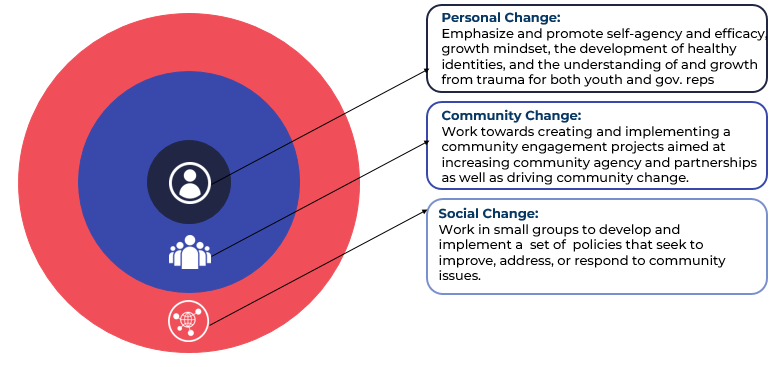
In ongoing work with the Justice Ambassadors Youth Council program, I consider what makes a policy or intervention transformative i.e. moving beyond individual reductions in prejudice into the realm of sustained, community and societal change. Using a mix-methods approach inclusive of participatory research, I examine programmatic outcomes alongside of related programmatic design, procedures, and implementation practices. Furthermore, I actively work to embed lessons learned from transformative politics within other areas of research (e.g., the development of a creative arts initiative “Collective Confinement”) as well as service initiatives (e.g., the development of a BRiDGE scholarship for underrepresented undergraduate students).
 Dr. Brooke Burrows